
PLANT Shipping Instructions -Outside Kenya
International Orders ONLY
Please Note: SEQART processes all sample as efficiently, quickly and carefully as possible. However, we are unable to process samples damaged or contaminated in transit, or if they are impounded by Customs.
Please be advised that compliance with strict Kenyan Quarantine regulations is Mandatory or your samples will not reach us and will be destroyed by Customs. Please follow our instructions very carefully.
(NB: We apply import permit for you)
|
Remember wells G12 and H12 are used for control and MUST BE EMPTY
|
|
2. PLANT TISSUE QUALITY AND QUANTITY REQUIREMENTS |
|
Minimise the risk that the submitted tissues contain pathogenic viruses, bacteria, pest and parasites. We accept 10-15mg of plant tissue. The success of gDNA extraction relies on tissue quality from sampling to arrival to our facility. Please use the best methods of sampling and storing your samples prior shipment. These methods depend on the plant and tissue source. Leaves Leaves are most used tissue source for plants. We recommend collecting leaves into liquid nitrogen, if feasible, if not on ice blocks or at least on desiccant as silica beads/gels. If possible, we recommend lyophilising leaf samples before subsampling into recommended plates for shipment. If you have any questions, please contact us at support@seqart.net. We will assist on leaf sampling techniques |
|
3. Seeds and other plant samples |
|
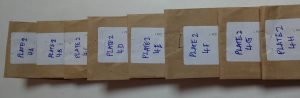
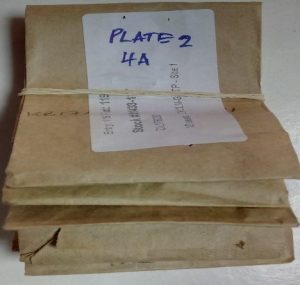
Seeds do not require special treatment, other than shipping with silica beads/gels. SEED PACKAGING 1. Package 5-8 dry seeds in an envelope. 2. Label the envelope with the Plate Number, Well Position, and the genotype for the sample as indicated in the sample tracking file. E.g. Plate 2, 1A, ke1. See Figure 1 showing Samples from plate 2 column 4
3. Use a rubber band or stapler to bind together all sample packets in same column from same plate. Do not mix up samples from different plates.
4. Pack sample packets from same plate in their own sample bag. 5. Ship the samples to SEQART AFRICA |
|
4. Tissue samples from museum collections/herbarium/prolonged storage/valuable materials |
|
We recommend that the gDNA form museum collections/herbarium/prolonged storage/valuable material is extracted by our users. If you have to rely on our DNA extraction services we will do our best, however it is critical you alert us that your material is from museum collections/herbarium/prolonged storage/valuable by adding adequate note while placing your order and on the Sample Tracking File in the Comments. Otherwise your samples will be processed using our standard procedures which may not be sufficient for museum collections/herbarium/prolonged storage/valuable tissues. If you have any questions, please contact us at support@seqart.net, we will assist based on experience with large diversity of processed organisms/tissue sources. |
|
5. SAMPLE PACKAGING |
For Plant Tissues, please follow the following instructions:
|
1. Please use the link http://nat-sci.com/product/mtrs-racks-and-tubes/ while navigating for the recommended product.
2. Please use the link https://www.micronic.com/product/tpe-push-caps while navigating for the recommended product.
|
6. Ship to Address |
|
JACKLINE CHEPKOECH, SEQART AFRICA , African Institute for Capacity Development(AICAD), Block C, Suite 110 Telephone: +254115729766 |